
Connected Cars 101: Features, Benefits, and Cybersecurity Risks
Our vehicles have transformed from mechanical machines into connected, rolling computers. Today, nearly every new vehicle shipped comes equipped with an onboard cellular connection, GPS receiver, and a complex array of local sensors. While this connected car technology has brought massive improvements in navigation, safety, and entertainment, it also introduces a new set of challenges that drivers must navigate. In this comprehensive guide, we will explore the essential aspects of the modern smart car, detail the latest smart car features 2026 has to offer, review the capabilities of modern vehicle infotainment systems, and highlight the growing car cybersecurity risks that every digital-age driver should understand. By learning how your car handles data, connects to external networks, and protects your personal information, you can enjoy the benefits of connectivity while keeping your digital footprint secure.

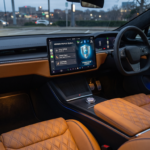
Connected car technology allows drivers to interact with their vehicles remotely using smartphone apps.
What is Connected Car Technology?
Connected car technology refers to a vehicle’s ability to share data over wireless networks with other devices, services, and infrastructure. This connectivity is enabled by a built-in cellular modem, often referred to as a telematics control unit (TCU). Through this cellular link, the vehicle communicates with cloud servers maintained by the automaker, providing real-world updates, remote access, and diagnostic monitoring.
This connectivity allows the vehicle to participate in several types of networks:
- Vehicle-to-Cloud (V2C): The car exchanges data with the manufacturer’s cloud, enabling over-the-air software updates, remote diagnostics, and mobile app control.
- Vehicle-to-Vehicle (V2V): Cars share speed, direction, and braking status with nearby vehicles to help prevent collisions and coordinate traffic flow.
- Vehicle-to-Infrastructure (V2I): The vehicle communicates with smart traffic signals, toll booths, and road sensors to optimize route planning and receive real-time traffic warnings.
Exploring Smart Car Features in 2026
The integration of cellular connectivity has enabled a variety of smart car features 2026 buyers now expect as standard. Many of these features focus on convenience, allowing you to lock or unlock doors, start the engine, adjust climate controls, and monitor the car’s location using a smartphone app.
Connectivity also improves safety through automated emergency services. If the vehicle is involved in an accident and the airbags deploy, the car’s telematics system automatically contacts emergency services, sending your precise GPS coordinates and vehicle details to dispatch help quickly. Additionally, stolen vehicle tracking features help law enforcement locate and recover vehicles more efficiently, reducing insurance costs for owners.
The Evolution of Vehicle Infotainment Systems
Modern vehicle infotainment systems serve as the central control panel for the car’s features. These systems combine entertainment, navigation, and vehicle settings into a single, cohesive interface. In 2026, the transition toward larger, high-resolution screens has allowed for more complex software features, such as built-in video streaming and gaming capabilities to keep passengers entertained while parked or charging.
Furthermore, cloud connectivity ensures that navigation maps are updated in real time, incorporating live traffic data, construction alerts, and weather conditions. Voice recognition systems have also matured, using natural language processing to adjust climate settings, send text messages, or search for points of interest without requiring the driver to take their eyes off the road.

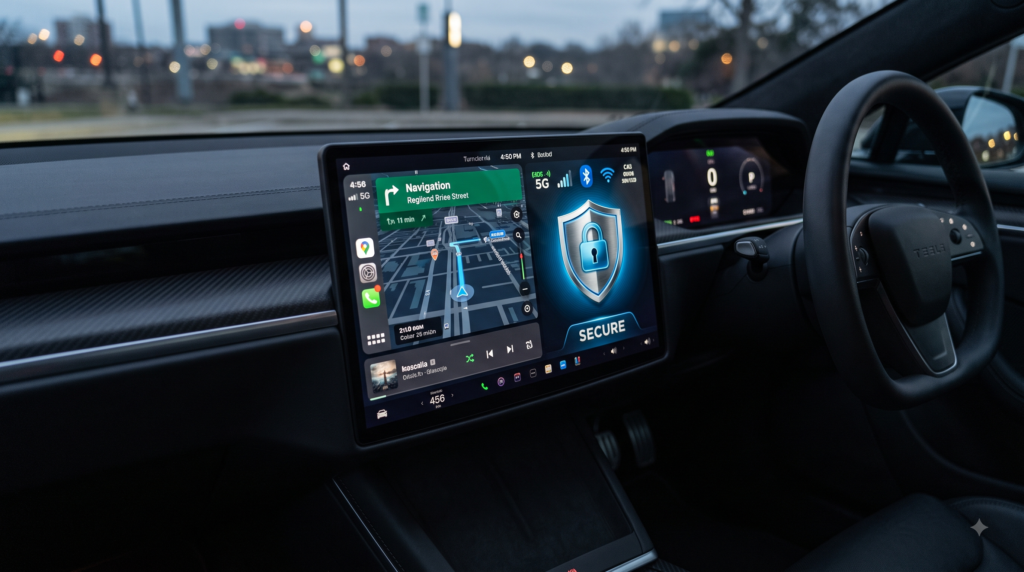
Modern vehicle infotainment systems integrate navigation, entertainment, and climate controls.
Understanding Car Cybersecurity Risks
While the benefits of connected cars are significant, they also introduce new security concerns. As vehicles connect to cellular networks, bluetooth devices, and public charging stations, they present a broader target for hackers. Understanding these car cybersecurity risks is essential to protecting your vehicle and personal data:
- Remote Hacking: Researchers have demonstrated that hackers can exploit vulnerabilities in telematics units to gain access to a vehicle’s steering, braking, or acceleration systems. Securing these systems is a top priority for automotive engineers.
- Keyless Entry Vulnerabilities: Relay attacks allow car thieves to capture the signal from a keyless entry fob inside a home and transmit it to the car, unlocking the vehicle and starting the engine without the physical key.
- Data Privacy Concerns: Connected cars collect a massive amount of data, including location history, driving habits, and phone contacts. Buyers should research how manufacturers store and share this data to protect their privacy.
Security Tip: To prevent relay attacks on keyless entry systems, store your vehicle’s key fob in a signal-blocking pouch (often called a Faraday bag) when at home. This blocks the transmission of wireless signals, preventing thieves from cloning your key.
Industry Responses and Standards
To address security risks, the automotive industry has developed new safety standards, such as ISO/SAE 21434, which outlines cybersecurity requirements for road vehicles. Automakers are also partnering with cybersecurity firms to perform regular security audits, implement secure boot protocols for vehicle computers, and establish bug bounty programs to identify and fix software vulnerabilities before they can be exploited.

Automakers are incorporating advanced encryption to secure wireless communication channels.
Practical Steps to Secure Your Connected Car
Drivers can take several practical steps to secure their vehicles and protect their personal information:
- Install Software Updates Promptly: Always download and install software updates as soon as they are made available by the manufacturer, as they often contain critical security patches.
- Reset Infotainment Systems Before Selling: When selling or returning a leased vehicle, perform a factory reset of the infotainment system to delete your home address, garage codes, and phone contacts.
- Use Strong Passwords: Secure the mobile app associated with your car with a strong, unique password and enable two-factor authentication (2FA) if available.
Conclusion
Connected car technology has redefined the modern driving experience, bringing convenience, improved safety, and advanced infotainment. However, the rise of smart car features 2026 has brought also highlights the importance of addressing car cybersecurity risks. By understanding the data your vehicle collects and taking proactive steps to secure your connections, you can enjoy the benefits of a connected vehicle while protecting your privacy and security. The automotive industry continues to develop new safety standards, helping ensure that the future of mobility remains both connected and secure.
Key Takeaways
- Telemetry Backbone: Onboard cellular modems form the foundation of connected car technology, enabling remote features and software updates.
- Active Safety: Features like automatic crash notification use cellular links to coordinate emergency responses quickly, saving lives in major accidents.
- Cyber Threats: Hackers can target wireless connections and keyless fobs, highlighting the need for robust encryption and secure key storage.
- Data Protection: Drivers should review privacy settings in their vehicle’s infotainment system and perform a factory reset before selling their car.