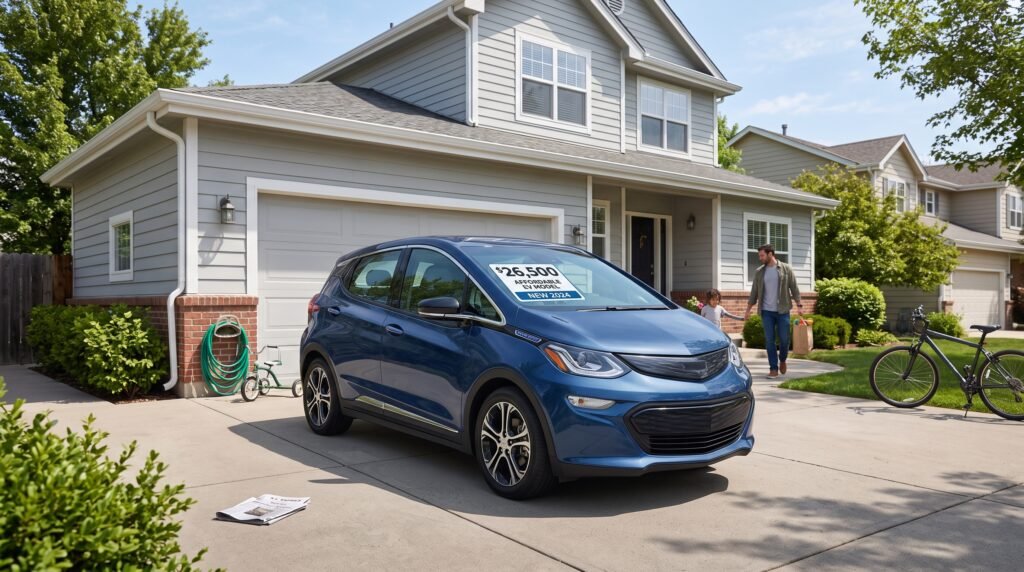

The Affordable EV Gap: Why Most Electric Cars Still Cost Too Much
Introduction: The transition to electric mobility is hailed as a cornerstone of environmental sustainability and the future of transit. In this article, you will learn why the consumer market is facing a critical EV price gap between expensive luxury EVs and the average buyer’s budget, why finding a high-quality affordable EV under 45000 is still a major challenge in North America, and how automakers are struggling to engineer budget electric vehicles that do not sacrifice range or build quality. We will examine the high cost of lithium-ion batteries, raw material extraction bottlenecks, the impact of federal tax incentives, and the landscape of cheap electric cars 2026 buyers can actually purchase. Whether you are currently shopping for an electric vehicle, tracking the automotive industry, or interested in the economics of clean energy transitions, this analysis breaks down the real barriers keeping electric cars out of the average driveway.

The expansion of city charging networks is essential to make cheap electric cars 2026 options practical for apartment renters.
The Illusion of Parity: Understanding the EV Price Gap
For years, automotive industry analysts projected that electric vehicles would reach price parity with internal combustion engine (ICE) cars by the mid-2020s. The theory was that as production volume scaled, the cost of manufacturing electric drivetrains would fall, closing the EV price gap. Yet, as we look at the current market, that parity remains elusive. The average transaction price for a new electric vehicle remains thousands of dollars higher than the average gas-powered car, placing EVs out of reach for a massive segment of the car-buying public.
This gap is not just an inconvenience; it is a major roadblock to mass adoption. While early adopters were willing to pay a premium for cutting-edge technology and environmental bragging rights, the mainstream consumer is highly price-sensitive. If an electric car costs significantly more than an equivalent gas car, the math simply does not add up for the average household, even when accounting for potential fuel and maintenance savings. To achieve widespread market penetration, manufacturers must find ways to build vehicles that appeal to the wallet as much as they do to the conscience.
The Missing Middle: The Search for an Affordable EV Under 45000
In the North American automotive market, the sweet spot for middle-class buyers has historically hovered around the $35,000 to $45,000 range. Unfortunately, a quick survey of the electric vehicle market reveals a glaring lack of options in this bracket. Most of the highly publicized EVs are luxury SUVs, performance sedans, or loaded pickup trucks costing well north of $60,000. Finding a capable, reliable, and family-friendly affordable EV under 45000 is akin to searching for a needle in a haystack.
The cars that do exist in this price range often require significant compromises. Many feature small battery packs that limit driving range, making them impractical for road trips or cold weather climates where battery efficiency drops. Others suffer from slow charging speeds, lacking the modern high-voltage architecture that allows for quick top-ups on the highway. For the average single-car household, these compromises are dealbreakers. Until automakers can deliver a no-compromises vehicle with 300 miles of range and rapid charging at a mainstream price point, the electric transition will remain stalled for the middle class.

Reducing battery production costs is the single most important factor in closing the EV price gap.
Why Batteries Make Budget Electric Vehicles So Difficult
To understand why electric cars cost so much, one must look at the bill of materials. The battery pack is the single most expensive component in an electric vehicle, often accounting for 30% to 40% of the total cost of the car. While the cost of battery cells has fallen dramatically over the past decade, the rate of decline has slowed due to the rising costs of raw materials like lithium, nickel, cobalt, and manganese.
Building budget electric vehicles is an exercise in extreme cost control. In a traditional combustion vehicle, scaling down the engine size or reducing interior amenities can quickly lower the production cost. With an EV, the battery size is tied directly to the vehicle’s range. If a manufacturer cuts the battery capacity to save money, they risk alienating buyers who suffer from range anxiety. If they keep the battery large, their profit margins evaporate. This economic bind has forced many legacy automakers to focus their efforts on high-margin luxury EVs, neglecting the affordable segments where profits are razor-thin or non-existent.
Raw Material Bottlenecks: The Geopolitical Challenge
The supply chain for battery materials is highly concentrated and subject to geopolitical volatility. The mining and refining of battery-grade lithium and nickel are concentrated in a handful of countries, leading to several bottlenecks:
- Refining Dominance: A single region controls the vast majority of global lithium and cobalt refining capacity, creating supply chain vulnerability for western car manufacturers.
- Mining Logistics: Developing new mines is a slow process, often taking up to a decade from initial discovery to commercial production, making it difficult for raw material supply to keep pace with rapid factory capacity increases.
- Environmental Regulations: The environmental impact of mining has led to strict local regulations, increasing the compliance costs and development timelines for new domestic extraction sites.
The Reality of Cheap Electric Cars 2026: What Buyers Face
As we navigate the market of cheap electric cars 2026, the options are beginning to slowly expand, but hurdles remain. Several manufacturers are introducing sub-compact SUVs and hatchbacks aimed at city commuters. However, buyers must adjust their expectations. These vehicles often utilize simpler suspension setups, cheaper interior plastics, and less sophisticated sound insulation to meet aggressive pricing targets.
Furthermore, the purchasing landscape is complicated by changing tax incentive structures. Governments have introduced tax credits to lower the purchase price of EVs, but these credits often come with strict sourcing requirements. To qualify, a vehicle’s battery components and raw materials must be sourced from countries with free-trade agreements, excluding many of the cheapest battery options currently manufactured. This means that a seemingly cheap EV may not qualify for the full tax incentive, making it less competitive against traditional gas-powered alternatives at dealership lots.

New manufacturing techniques are helping automakers build a reliable affordable EV under 45000 for mainstream buyers.
The Technological Path to Lowering Costs: LFP Batteries and Gigacasting
To break the stalemate and bridge the EV price gap, automakers are turning to new engineering and manufacturing technologies. One of the most promising shifts is the adoption of Lithium Iron Phosphate (LFP) battery chemistry. Unlike nickel-cobalt-manganese (NCM) batteries, LFP batteries do not use expensive cobalt or nickel. They are cheaper to produce, more durable, and inherently safer. Although LFP batteries have lower energy density, which translates to slightly heavier packs and shorter range, they are ideal for budget electric vehicles designed for daily city commutes.
On the manufacturing side, automakers are adopting “gigacasting”—using massive casting machines to produce large, single-piece structural components for the vehicle chassis. Traditionally, a car chassis is made by welding together dozens of stamped metal sheets. Gigacasting eliminates these steps, reducing factory footprint, labor costs, and vehicle weight. By combining cheaper battery chemistries with simplified assembly methods, manufacturers are aiming to finally unlock profitable mass-market electric vehicles.
Comparing Costs: Gas vs. Entry-Level EV Ownership
To help consumers evaluate the financial reality of purchasing a budget electric vehicle, we can look at the typical ownership costs over a five-year period:
- Purchase Price: A gas-powered compact crossover averages around $32,000, while a comparable entry-level EV averages around $42,000 before local incentives, creating an initial premium.
- Fuel and Charging: Electricity is generally cheaper than gasoline. Charging an EV at home can save a driver between $800 and $1,500 per year in fuel costs, depending on local utility rates and annual mileage.
- Maintenance: EVs have fewer moving parts—no oil changes, spark plugs, or timing belts. Over five years, an EV will typically cost 30% to 40% less to maintain than an internal combustion vehicle.
Key Takeaways
- Persistent EV Price Gap: High raw material costs and battery manufacturing expenses keep the average electric vehicle price significantly higher than comparable gas cars.
- Range vs. Price: The search for an affordable EV under 45000 is limited by trade-offs, forcing buyers to choose between budget pricing and long-distance driving range.
- Battery Chemistry Shift: The transition to Lithium Iron Phosphate (LFP) cells is helping manufacturers lower production costs by eliminating expensive cobalt and nickel.
- Total Cost of Ownership: While cheap electric cars 2026 options require higher upfront costs, they can offset the difference over time through lower charging and maintenance fees.