
Electric Hypercars and Hybrid Supercars: How Legacy Brands Are Reinventing Performance
Introduction: The automotive world is witnessing a dramatic revolution as the definition of performance undergoes its most radical change in a century. In this article, you will learn how iconic legacy brands like Ferrari, Porsche, and McLaren are fighting back against clean-slate electric startups by engineering the ultimate electric hypercar 2026 models, how they are utilizing hybrid supercar drivetrains to preserve the sensory thrill of combustion engines, and how the latest technology in performance EV models is trickling down to more accessible electric sports car designs. We will explore the physics of torque vectoring, solid-state battery progress, active aerodynamics, and the engineering challenge of making electric cars feel engaging to drive. For enthusiasts wondering if the soul of the sports car can survive in an electrified age, this detailed analysis reveals how the pursuit of pure speed is being successfully reinvented for the next generation.

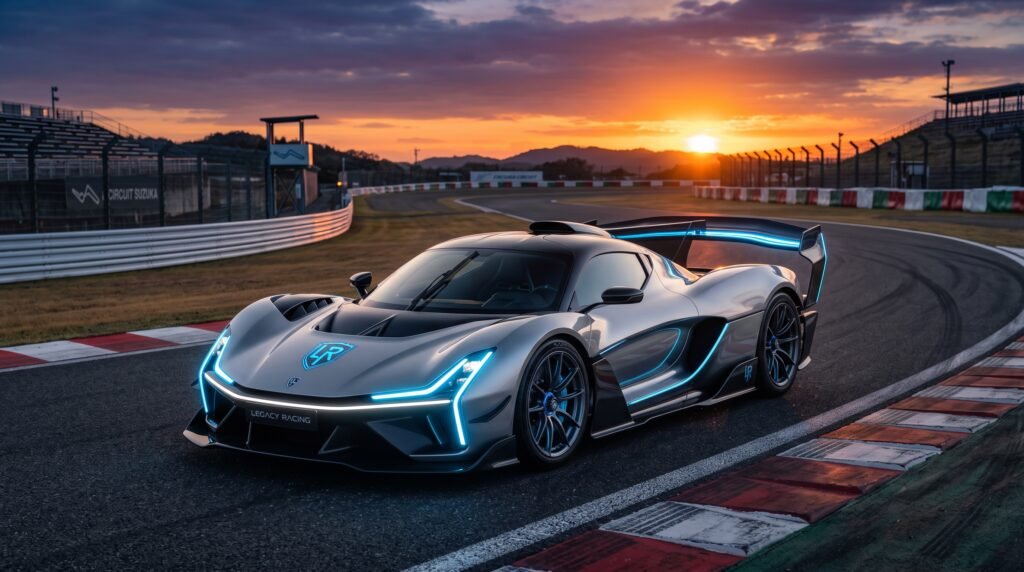
The cutting-edge electric hypercar 2026 platforms combine multi-motor layouts with advanced structural battery packs for optimal weight distribution.
The Paradigm Shift: From Horsepower to Megawatts
For decades, the metrics of high-performance cars were simple: displacement, cylinder count, turbocharger boost, and maximum engine speed. Legacy manufacturers spent billions of dollars refining the combustion process, coaxing incredible power outputs from V8, V10, and V12 engines. The sound of an engine revving to 9,000 RPM was not just a byproduct of performance; it was the emotional core of the machine. The roaring exhaust notes, mechanical gear changes, and rising power curves formed an immersive sensory experience that defined automotive passion.
However, the emergence of electric propulsion shattered the established hierarchy. Electric motors deliver maximum torque instantly from zero RPM, providing acceleration that combustion engines cannot physically match. Early electric drag-strippers proved that a heavy sedan could out-accelerate a multi-million-dollar exotic car off the line. This forced legacy manufacturers to make a choice: ignore electrification and risk obsolescence, or embrace it and redefine what a high-performance vehicle could be. The result is the modern electric hypercar 2026, a vehicle category that moves performance measurements from horsepower to megawatts and sets astonishing new records on tracks worldwide.
The Bridge of Power: The Rise of the Hybrid Supercar
While full electrification offers unmatched acceleration, legacy brands recognize that many enthusiasts are not yet ready to abandon the combustion engine. The solution is the hybrid supercar, a complex engineering masterpiece that marries high-revving internal combustion engines with high-voltage electric motors. Rather than using hybridization solely to improve fuel efficiency, these vehicles use electric motors to fill the gaps in the combustion engine’s power delivery, a process known as torque fill.
In a typical hybrid supercar configuration, electric motors are mounted on the front axle or integrated directly into the transmission. At low engine speeds, before turbochargers can build boost or the engine can reach its power band, the electric motors deploy instant torque. This creates a seamless, linear power curve that feels like an massive, naturally aspirated engine. Furthermore, these systems allow for sophisticated torque vectoring on the front axle, turning the wheels independently to pull the car through corners with unprecedented agility. By retaining the internal combustion engine, legacy brands preserve the mechanical soundtrack and emotional connection that define the supercar experience, while leveraging electric technology to achieve new heights of performance.

Modern hybrid supercar powertrains seamlessly blend electric drive motors with twin-turbocharged combustion engines for maximum responsiveness.
Engineering Engagement in the Performance EV Era
The transition to a pure performance EV presents a unique challenge for engineers: how to make a car that is intellectually engaging to drive, rather than just mind-numbingly fast in a straight line. In a traditional sports car, the driver is constantly interacting with the machine—managing engine revs, listening to the exhaust note, and anticipating gear shifts. In an electric vehicle, the lack of gears and silent operation can lead to a sterile, detached driving experience, regardless of how fast the vehicle covers ground.
To combat this, manufacturers are investing heavily in chassis dynamics and synthetic sensory feedback. Advanced software controls how power is distributed to each individual wheel, using torque vectoring algorithms to mimic or even enhance the handling characteristics of classic mid-engine sports cars. Some manufacturers are experimenting with simulated multi-speed gearboxes and auditory cabins that translate motor frequencies into a futuristic, mechanical soundscape. The goal is to create a dynamic feedback loop between the road, the car, and the driver, ensuring that the performance EV remains a driver’s tool rather than an automated speed pod.
The Technologies Defining Modern High-Performance EVs
Several technological breakthroughs are enabling the latest wave of high-performance electric vehicles. These technologies are pushing the boundaries of what is possible on four wheels:
- 800-Volt and 900-Volt Architectures: High-voltage systems reduce electrical resistance, allowing for faster charging times, lighter wiring harnesses, and sustained power output without thermal degradation.
- Silicon Carbide Inverters: These advanced inverters switch power much more efficiently than traditional silicon models, reducing energy loss and allowing for more precise motor control.
- Axial Flux Motors: Replacing traditional radial flux motors, axial flux designs offer significantly higher power and torque density in a much smaller, lighter package, making them ideal for packaging inside supercar wheels or tight chassis structures.
From Track to Street: The Trickle-Down to the Electric Sports Car
Just as Formula 1 technology eventually found its way into family sedans, the extreme innovations developed for million-dollar hypercars are rapidly trickling down to the production electric sports car. These mid-market sports cars are beginning to benefit from lighter battery packs, faster motors, and sophisticated thermal management systems that were originally developed for track-only specials.
For the average enthusiast, the democratization of performance EV technology means that future sports cars will be more agile, reliable, and capable than ever before. We are starting to see the emergence of lightweight electric sports car models that prioritize handling and driver feedback over raw 0-60 mph times. By focusing on battery packaging—such as placing the batteries behind the seats to mimic the weight distribution of a mid-engine car rather than laying them flat under the floor—engineers are preserving the low seating position and nimble handling dynamics that sports car purists demand.

The modern electric sports car is engineered with mid-mounted battery layouts to maintain classic handling balances.
The Battery Bottleneck: Weight and Thermal Management
Despite the immense power potential of electric motors, two persistent enemies threaten the viability of high-performance EVs: weight and heat. Batteries are heavy, and carrying a 1,000-pound battery pack through corners is a major challenge for suspension designers and tire manufacturers. Excess weight harms steering feel, braking performance, and tire longevity. Furthermore, driving a vehicle at its limit generates massive amounts of heat within the battery cells, which can trigger thermal throttling and temporarily reduce power output.
To address this, hypercar manufacturers are pioneering new cooling methods, such as direct cell immersion cooling, where a non-conductive liquid flows directly around the battery cells to extract heat rapidly. Looking slightly further ahead, the transition to solid-state batteries promises to revolutionize the segment. Solid-state batteries offer higher energy density, allowing for smaller, lighter battery packs that store the same amount of energy. They also charge much faster and are inherently more stable under extreme thermal stress, removing the final barriers to making electric hypercars truly track-capable over extended sessions.
Comparing Performance Concepts: Combustion, Hybrid, and Pure Electric
To understand the tradeoffs between these different engineering approaches, we can compare their performance attributes side-by-side:
- Combustion Supercar: Offers lightweight agility, a mechanical exhaust note, and driver engagement through manual or dual-clutch shifting, but lacks instant low-end torque and suffers from emission constraints.
- Hybrid Supercar: Combines the sensory appeal of a combustion engine with the torque fill and torque vectoring of electric motors, but features high mechanical complexity, added packaging challenges, and high maintenance costs.
- Pure Performance EV: Delivers unmatched acceleration, zero tailpipe emissions, and precise software-controlled handling, but carries a weight penalty from batteries and requires advanced thermal management to sustain high speeds.
Key Takeaways
- Megawatt Era: The electric hypercar 2026 models are moving beyond traditional horsepower ratings, utilizing multi-motor setups to achieve over 1,500 horsepower and instant all-wheel power delivery.
- Torque Fill Technology: The hybrid supercar serves as the ultimate transitional performance machine, using electric motors to eliminate turbo lag and enhance combustion engine characteristics.
- Weight & Thermals: Engineering a performance EV requires tackling the challenges of battery weight and heat through innovative immersion cooling and mid-engine style battery layouts.
- Democratization of Performance: High-end hypercar technology is rapidly migrating down to mid-tier electric sports car designs, offering enthusiasts highly responsive handling and precise torque vectoring at lower price points.