
Why Manual Gearboxes and 3D-Printed Engines Are Making a Surprising Comeback
Introduction: In an era dominated by rapid electrification, digital touchscreens, and autonomous driving aids, a fascinating counter-revolution is taking place within the automotive community. In this article, you will learn why driving purists are spark-plugging a massive manual transmission comeback in high-performance sports cars, how cutting-edge additive manufacturing is enabling the creation of the ultra-complex 3D printed engine, and how these seemingly opposite trends are merging to preserve traditional mechanical car craftsmanship. We will explore why modern paddle-shift gearboxes are losing their appeal to collectors, how boutique manufacturers are utilizing advanced metallurgy to print structural engine blocks, and what this means for the future of driving enthusiast cars. For anyone who believes that the connection between driver, machine, and road is an art form worth saving, this article provides a detailed look at the engineering and culture keeping mechanical purity alive.

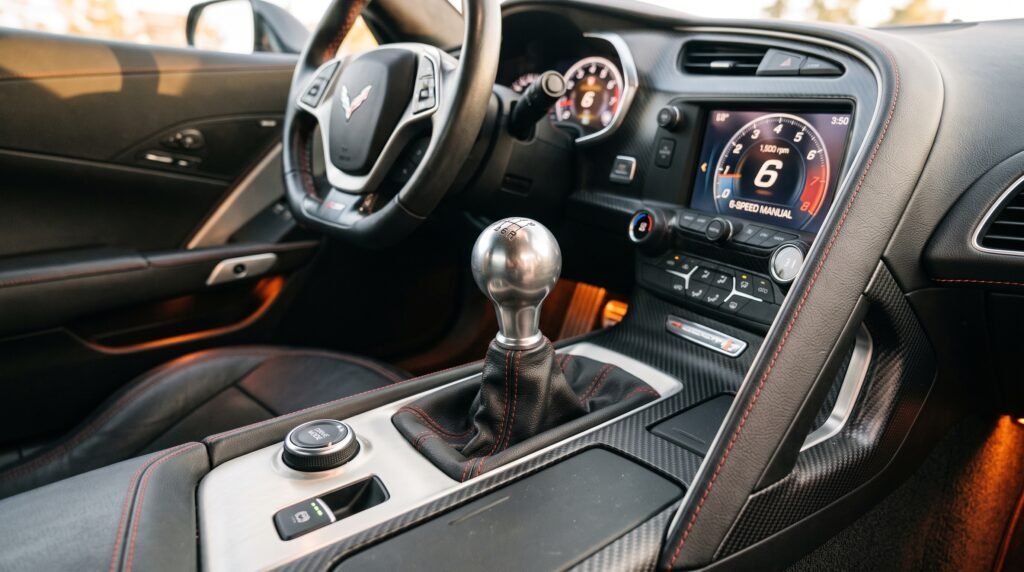
The tactile feel of a gated manual shifter represents the pinnacle of mechanical car craftsmanship for modern driving purists.
The Digital Fatigue: Why Modern Drivers Are Looking Backward
Modern automobiles are technological wonders. Dual-clutch transmissions can shift gears in milliseconds—far faster than any human hands and feet could manage. Turbocharged engines deliver wide, flat torque curves, and electronic stability control systems calculate traction margins hundreds of times per second. On paper, modern performance cars are faster, safer, and more efficient than their predecessors. Yet, on the road, many enthusiasts are experiencing a sense of detachment. The act of driving has become increasingly passive, replaced by a video-game-like interface where the driver acts as a director rather than an active operator.
This digital fatigue has triggered a profound shift in consumer preference. Rather than chasing absolute lap times or paper statistics, drivers are searching for engagement, tactile feedback, and emotional resonance. This explains the unexpected manual transmission comeback. Buyers are demanding the return of the clutch pedal and the gear lever, even if it means their cars are slightly slower from 0 to 60. The mechanical feedback of sliding a gear selector into place, matching engine revs on a downshift, and orchestrating the balance of torque and traction has become a luxury experience in a homogenized, automated market.
The Core of the Movement: Inside the Manual Transmission Comeback
For several years, it appeared that the manual transmission was headed for extinction. Major manufacturers began phase-outs, citing low take rates, high certification costs, and the difficulty of integrating active safety systems with manual drivelines. However, the secondary market reacted fiercely. Used sports cars with manual gearboxes began command massive price premiums over their automatic counterparts. Recognizing this, boutique automakers and legacy brands are reversing course.
This comeback is not merely a nostalgic retreat; it is a deliberate repositioning of the manual gearbox as a premium feature for driving enthusiast cars. Manufacturers are re-engineering manual linkages to offer crisper throws, weighted gates, and mechanical feedback that elevates the connection between driver and drivetrain. By offering manual options in limited-run models, brands are catering directly to collectors and purists who prioritize the subjective quality of the drive over the objective metrics of speed. The manual gearbox has evolved from a entry-level price leader into a badge of honor for the discerning driver.
Revolutionizing Manufacturing: The Rise of the 3D Printed Engine
While the manual gearbox represents a return to traditional driver engagement, the manufacturing of the engines themselves is leaping into the far future. Internal combustion engines are highly complex assemblies requiring precise tolerances, complex cooling channels, and lightweight structural components. Traditionally, these parts were manufactured using metal casting, CNC milling, and forging—processes that are expensive, time-consuming, and limited by geometric constraints. The arrival of metal 3D printing, or additive manufacturing, is changing everything.
A 3D printed engine utilizes advanced laser-powder bed fusion to build engine components layer by layer out of specialized metal alloys, such as titanium, inconel, or high-strength aluminum. This allows engineers to design parts with internal geometry that would be physically impossible to create using traditional casting or subtractive machining. For example, cooling jackets can follow the exact contour of a cylinder wall, drastically improving thermal efficiency. Structural brackets can use generative design algorithms to mimic natural organic shapes, reducing weight while increasing stiffness. By printing the engine block, cylinder head, and intake manifolds, manufacturers are squeezing unprecedented performance out of highly compact packages.

Additive manufacturing allows engineers to design a 3D printed engine with internal cooling geometries that are impossible to cast.
The Synthesis: Merging Tech with Mechanical Car Craftsmanship
At first glance, manual gearboxes and 3D printing appear to be contradictory trends—one looking back to the 19th century, the other looking forward to the 21st. In reality, they represent a unified philosophy: the elevation of mechanical car craftsmanship. High-end automotive builders are using 3D printing to manufacture bespoke gear shifters, linkage linkages, and throttle pedal assemblies that feel incredibly precise and look like fine mechanical jewelry.
This fusion of technology and art allows boutique manufacturers to build bespoke sports cars in tiny production runs. Without the need for expensive tooling, casting molds, and stamping dies, a designer can sketch an intricate component, print it in titanium, polish it by hand, and install it on a customer’s car within days. The result is a return to coachbuilding, where every vehicle is a unique piece of mechanical art tailored to the individual owner. It elevates the automobile from a mass-produced consumer appliance to a curated object of craftsmanship.
Benefits of Metal 3D Printing in Engine Development
The application of 3D printing technology to internal combustion engines is unlocking massive benefits that were once restricted to aerospace prototypes:
- Part Consolidation: Entire assemblies that previously required dozens of separate bolts, gaskets, and brackets can be printed as a single, contiguous component, reducing assembly time and potential failure points.
- Generative Design: Advanced software optimizes the distribution of material, putting strength only where needed and removing excess weight to create organic, lightweight structures.
- Rapid Prototyping: Engineers can test multiple iterations of intake manifolds or combustion chambers in days, accelerating the development cycle for low-volume high-performance engines.
Defining the Driving Experience: Driving Enthusiast Cars
What makes a car a true enthusiast machine? It is not a matter of high horsepower ratings or aggressive styling. Instead, it is a combination of balance, steering feedback, throttle response, and control interface. The best driving enthusiast cars act as extensions of the driver’s body. The weight of the steering wheel conveys the grip levels of the front tires, the throttle pedal reacts instantly to micro-adjustments, and the manual gearbox allows the driver to select the exact gear for any driving scenario.
By focusing on these core elements, boutique builders are carving out a highly profitable niche. While mass-market manufacturers focus on large screen layouts and driver assistance systems, enthusiast-focused brands are stripping away unnecessary electronics, returning to hydraulic power steering, and focusing on mechanical feedback. The goal is to build cars that are satisfying to drive at legal speeds on public roads, rather than vehicles that can only be enjoyed at the absolute limit on a closed race track.

The demand for driving enthusiast cars is surging as motorists seek interactive, tactile driving experiences away from screens.
Future Outlook: Will Regulations Suffocate Mechanical Art?
The primary threat to these mechanical vehicles is not consumer demand—which is stronger than ever—but government regulation. Stricter emissions standards and mandates for full electrification threaten to ban internal combustion engines entirely. However, the high-performance car industry is adapting. The development of carbon-neutral synthetic fuels (e-fuels) offers a path forward, allowing internal combustion engines to run without releasing fossil carbon into the atmosphere.
Furthermore, because these cars are driven infrequently and in small numbers compared to daily commuter vehicles, many jurisdictions are considering exemptions for low-volume, collector vehicles. This ensures that the manual gearbox and the printed engine will continue to exist as premium hobbies, much like mechanical watches survived the digital quartz crisis to become highly valued collector’s items. The mechanical car will remain a celebrated art form, enjoyed by those who appreciate the physical interface of metal, fuel, and human input.
Comparing Mechanical Control vs. Digital Automation
To highlight the difference between these two philosophies, we can contrast their core operational traits:
- Tactile Manual Control: Direct cable or rod-linked shifter, mechanical clutch friction point, analog throttle cable or direct response, driver-determined shift points, high cognitive engagement.
- Digital Automated Control: Electronic steer-by-wire, paddle-shift dual-clutch or single-speed drive, torque vectoring systems, computer-managed shift algorithms, low driver involvement.
Key Takeaways
- Tactile Demand: The manual transmission comeback is driven by digital fatigue, as enthusiasts seek interactive driving experiences over automated speed.
- Design Freedom: The development of the 3D printed engine allows boutique builders to manufacture highly efficient, light, and complex engine parts that were historically impossible to cast.
- Mechanical Craftsmanship: Combining high-tech additive manufacturing with classic controls elevates modern low-volume cars into highly valued works of mechanical art.
- Enthusiast Ecosystem: Driving enthusiast cars are finding a sustainable path forward through boutique low-volume exemptions, high-end customization, and the development of synthetic e-fuels.