
Chinese Automakers Are Disrupting the Global Car Market — Here’s How
The global automotive industry is experiencing its most significant disruption in fifty years. While German, American, and Japanese brands have dominated the global EV market for decades, a new wave of competitors is challenging their leadership. In 2026, Chinese automakers are no longer just domestic suppliers; they are expanding internationally, offering advanced technology at highly competitive prices. Driven by extensive investments in battery manufacturing and software, Chinese electric cars 2026 has introduced are shaking up sales charts across Europe, Latin America, Southeast Asia, and the Middle East. In this article, we will analyze the strategies behind this rapid expansion, explore the appeal of affordable Chinese EVs, evaluate the intense automotive competition China presents to legacy brands, and discuss what this means for everyday car buyers looking for their next vehicle.

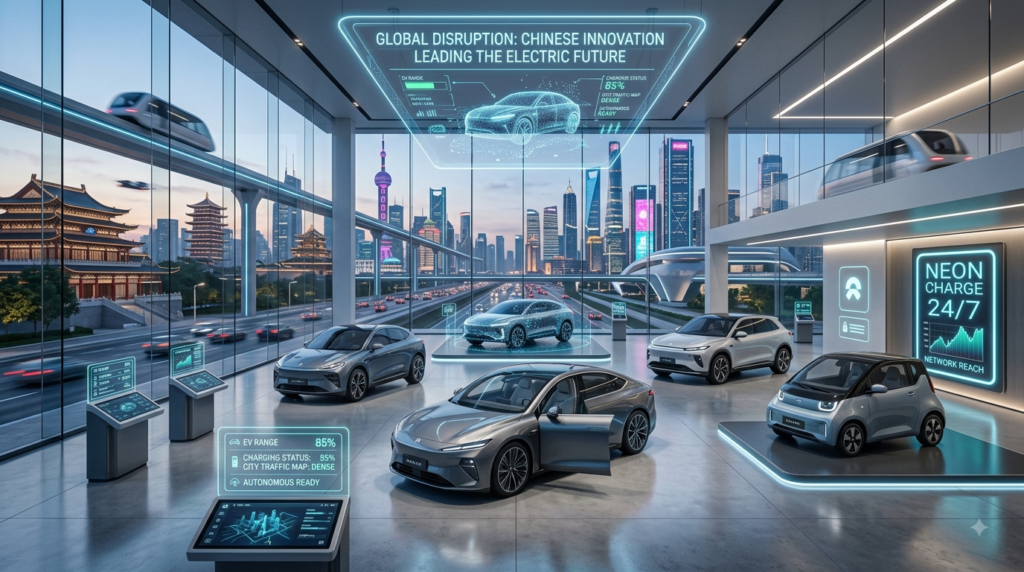
Chinese automakers are presenting advanced design and technology to the global market.
The Foundation of China’s Automotive Growth
The rapid rise of Chinese automakers is the result of long-term planning. Nearly two decades ago, China’s industrial planners recognized that competing directly with Western and Japanese brands in combustion engine technology would be difficult due to decades of engineering experience. Instead, they chose to focus on electric vehicles, investing heavily in the entire EV ecosystem.
This strategy focused on securing key components of the supply chain:
- Raw Material Refining: Chinese companies built dominant positions in refining lithium, cobalt, nickel, and graphite, the essential minerals for EV batteries.
- Battery Manufacturing: China became home to the world’s largest battery manufacturers, including CATL and BYD, which supply batteries to both Chinese brands and major Western automakers.
- Localized Supply Ecosystem: By clustering parts suppliers near assembly plants, Chinese manufacturers reduced shipping costs and accelerated product development.
As a result, Chinese automakers can build electric vehicles faster and more cost-effectively than many of their international competitors, giving them a distinct advantage as the world shifts toward electric mobility.
The Impact on the Global EV Market
In 2026, the global EV market is feeling the full impact of this supply chain advantage. Chinese brands are expanding beyond their domestic market, launching vehicles in regions with open trade policies. In Europe, these brands have captured a significant share of the electric vehicle market, offering vehicles that combine good build quality, modern styling, and competitive range at prices that often undercut domestic models.
In response, trade regions like the United States and the European Union have introduced tariffs and trade barriers to protect their local industries. However, Chinese brands are adapting by investing in manufacturing facilities within these regions, such as building assembly plants in Europe and South America, allowing them to bypass import taxes and build closer relationships with local consumers.
The Appeal of Affordable Chinese EVs
The main driver of consumer interest in these new brands is the availability of affordable Chinese EVs. While Western automakers have focused on premium electric SUVs and luxury sedans, Chinese brands have prioritized budget-conscious segments, offering practical city hatchbacks and compact crossovers.
Importantly, these affordable models do not compromise on technology. Many entry-level Chinese EVs come standard with features like large touchscreen displays, advanced driver assistance systems, and efficient lithium-iron-phosphate (LFP) batteries that offer long life and fast charging. This combination of value and technology is attracting buyers who want to transition to electric driving but find Western options too expensive.

Highly automated factories allow manufacturers to build electric vehicles efficiently and at scale.
Analyzing the Tech: Battery Integration and Software
Chinese automakers are also leading in technical innovation. For example, the development of Cell-to-Body (CTB) battery integration allows the battery pack to serve as the vehicle’s floor structure. This design reduces weight, increases cabin space, and improves structural safety during collisions.
Additionally, these vehicles feature modern software platforms. With clean, responsive user interfaces, integrated voice assistants, and regular over-the-air updates, the cabin experience mirrors the technology consumers expect from their smartphones, making many legacy systems feel outdated by comparison.
Market Fact: BYD (Build Your Dreams) has grown to become one of the largest electric vehicle manufacturers globally, competing directly with Tesla in total sales volume. Their success is driven by their vertical integration, as they build their own batteries, electric motors, and microchips.
Implications for Western and Japanese Brands
The rising competition is forcing established automakers to accelerate their own development cycles. To remain competitive, brands like Volkswagen, Ford, and Stellantis are working to reduce production costs, simplify their platforms, and secure local battery supply chains. This intense competition is driving innovation across the entire industry, ultimately benefiting buyers through better products and more competitive pricing.

Increased competition gives consumers access to a wider variety of electric vehicles.
What This Means for Everyday Buyers
For car buyers, the entry of new brands offers more options and competitive pricing. If you live in a region where these vehicles are available, you can choose from a range of efficient, tech-rich models at mainstream price points. However, before purchasing from a new brand, buyers should consider a few practical factors:
- Dealer and Service Networks: Ensure the brand has established service centers and parts availability in your area to handle maintenance and repairs quickly.
- Resale Value: Because these brands are new to many markets, their long-term depreciation and resale value are still being established.
- Warranty Support: Review the warranty terms carefully, ensuring the manufacturer has a reliable local presence to honor battery and electronics coverage.
Conclusion
Chinese automakers have transitioned from fast followers to global leaders in electric mobility, altering the dynamics of the global EV market. By leveraging supply chain advantages, investing in battery technology, and focusing on affordable Chinese EVs, they have created a competitive landscape that is reshaping the automotive sector. As Western and Japanese brands adapt to this new competition, the pace of innovation will continue to accelerate, driving down costs and making efficient, connected electric vehicles accessible to more drivers worldwide.
Key Takeaways
- Supply Chain Dominance: Long-term investments in mineral refining and battery manufacturing give Chinese brands a major cost advantage.
- Value Focus: By offering feature-rich, affordable Chinese EVs, these brands are capturing budget-conscious segments that Western brands have overlooked.
- Global Expansion: Despite tariffs in some regions, Chinese automakers are building international factories to establish a permanent global presence.
- Accelerated Innovation: Intense competition is forcing the entire industry to improve battery efficiency, software quality, and manufacturing speed.